Oasis Montana Inc.
|

Oasis Montana Inc. is a woman-owned and operated small Montana business that was incorporated in 1999 that employees 100% minority, disabled veterans. We are proud to have been helping people being energy efficient & energy independent for over 25 years.
- System information
- Example Systems
- Components
- Appliances
- Our company
- Site map
|
- BATTERIES -
|
||||||||||||||||||||||||||||
|
If inverters are the main brain to a power system, then batteries are the "heart" of such a system. While the rest of the system will require little maintenance, batteries require constant monitoring and regular maintenance. It is said that "few batteries die - most are killed" by neglect and poor maintenance. Sad but true! Below is some very basic information on battery care. This information is not for gel-cell, NiCd or alkaline batteries, which will have different maintenance requirements. MAKE CERTAIN you know what batteries are in your system, and their requirements. They are too expensive and hazardous to take their care and maintenance lightly. BATTERY CARE
***************
************** ONE OF OUR MOST POPULAR
BATTERIES Comparable to the popular "L-16", these batteries are
unsurpassed in performance and warranty for small to mid-sized systems.
are the specs: |

| Model 6V 3 Cell | CAP. 100 hr. rate | CAP.20 hr. rate | Length | Width | Height | Weight | Price |
| S6 L16 | 486ah | 375ah | 12.3" | 7.1" | 16.8" | 117 lbs | call |
| S6 L16HC | 554ah | 428ah | 12.3" | 7.1" | 16.8" | 127 lbs | call |
|
There are more Surrette Rolls Series 4000 and 5000 Batteries available, please call for further information. Surrette Rolls are made in Canada. |
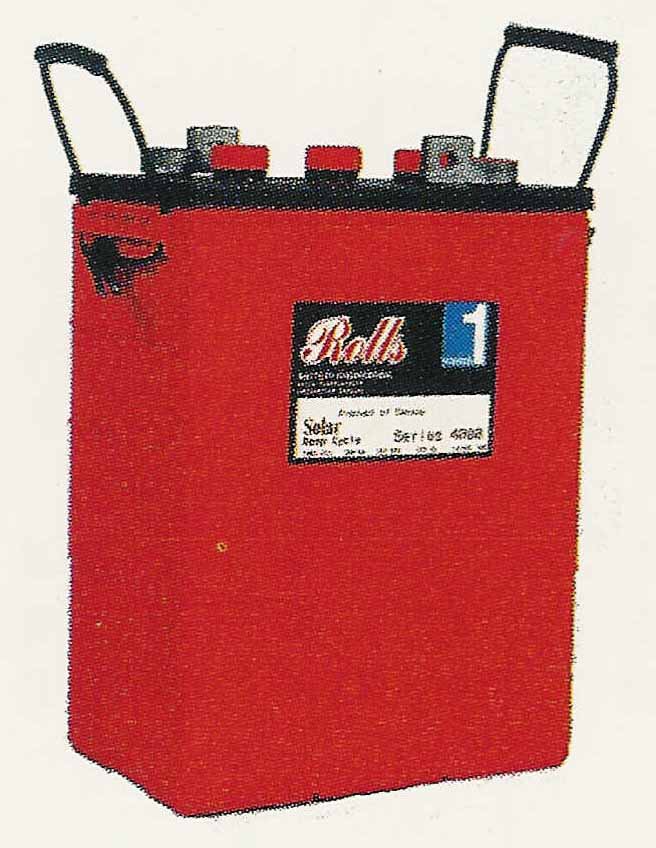 |
These batteries feature the use of the thickest plate, highest density active material in plate construction; their service life averages ten years. They have an increased liquid reserve--which makes for less maintenance. Rolls Battery Engineering has been making batteries for more than 60 years. These quality units are suitable for back-up power for residential applications, as well as remote monitoring stations, navigation aids, refrigeration, and uninterrupted power systems. The maximum number of batteries to safely
series/parallel is 16. If you need more batteries to meet
your storage needs, consider the 2V cells. Call us if you have
questions about this. |
||||||||||||||||||||||||||||||||||||||||||
|
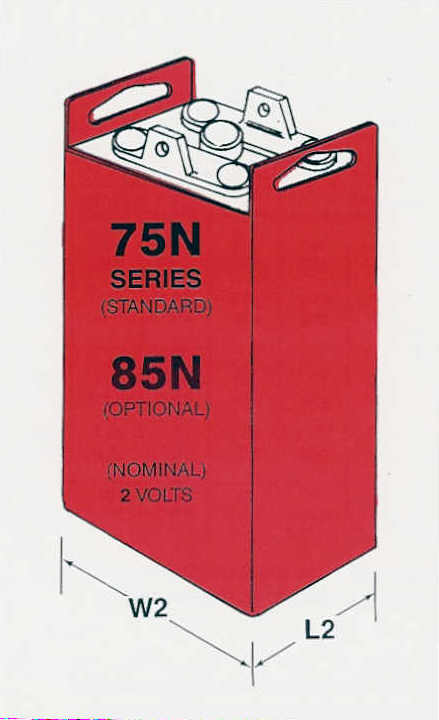
HEAVY DUTY INDUSTRIAL 2V CELLS FROM INDUSTRIAL BATTERY ENGINEERING (IBE) |
|||||||||||||||||||||||||||||||||||||||||||
 Click to enlarge |
|
||||||||||||||||||||||||||||||||||||||||||
|
Standard features:
|
|||||||||||||||||||||||||||||||||||||||||||
|
|
|||||||||||||||||||||||||||||||||||||||||||
Call for your freight on these top-end batteries! Units ship from California, and generally have a 2-3 week lead time. |
|||||||||||||||||||||||||||||||||||||||||||
|
|||||||||||||||||||||||||||||||||||||||||||
|
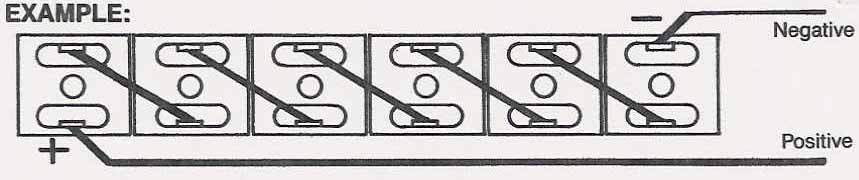
Other notes on these fabulous batteries: these are heavy duty, deep cycle, high recovery, industrial type cells. You'll need six of these for a 12V system, 12 for a 24V system, etc. Special packaging is available for export shipment, add $200 per pallet to list price plus shipping. Batteries available "dry charged" (no electrolyte), add 17% to list price. Fewer than 6 cells, plastic or steel case adds $45
charge per cell; otherwise that's included for a 6 cell (or more)
purchase. |
|||
|
************
*********** HOW TO SIZE YOUR BATTERY BANK:
there's a fairly simple formula for figuring how many of what kind of
batteries you need for your power requirements. Here's how it
goes: first, you need to know how many watt-hours per day you need for
your power system. That is simply square one! Then, you take
that figure time 1.3 - the fudge factor (as batteries and other
components aren't 100% efficient) to get your "adjusted watt
hours needed per day". Now that you know that, take your
adjusted watt-hours per day times the number of days of battery
storage you'd like (we usually use at least a minimum of 3 and as much
as 14); then take that number times 2 (for 50% depth of discharge--you
never want to take your batteries lower than that), then take THAT
number divided by your system voltage (probably 12, 24 or 48V)--and
that equals the number of amp hours of storage you need. So let's
use a figure--say you need 5000 watt hours per day; times 1.3 = 6500
"adjusted" watt-hours; take 6500 times 4 (for four days of
storage) = 26000 X 2 (for 50% depth of discharge) = 52000; divided by
24 (system voltage) = 2166 amp hours of storage. |
|
WHAT TRUCK FREIGHT ENTAILS: The best rate for
truck freight shipping is to have you pick it up at the local freight
terminal or commercial drop point. A residential delivery is usually $40
to $45 more than a business delivery, and a lift gate (which drops the
goods off at ground level), is another $80 to $100 in additional fees.
Inside delivery is an additional cost on top of that. |
|
****** If you can't find what you are looking for on this page, you are welcome to: SEARCH OUR SITE
|
|
Or Go To Our |